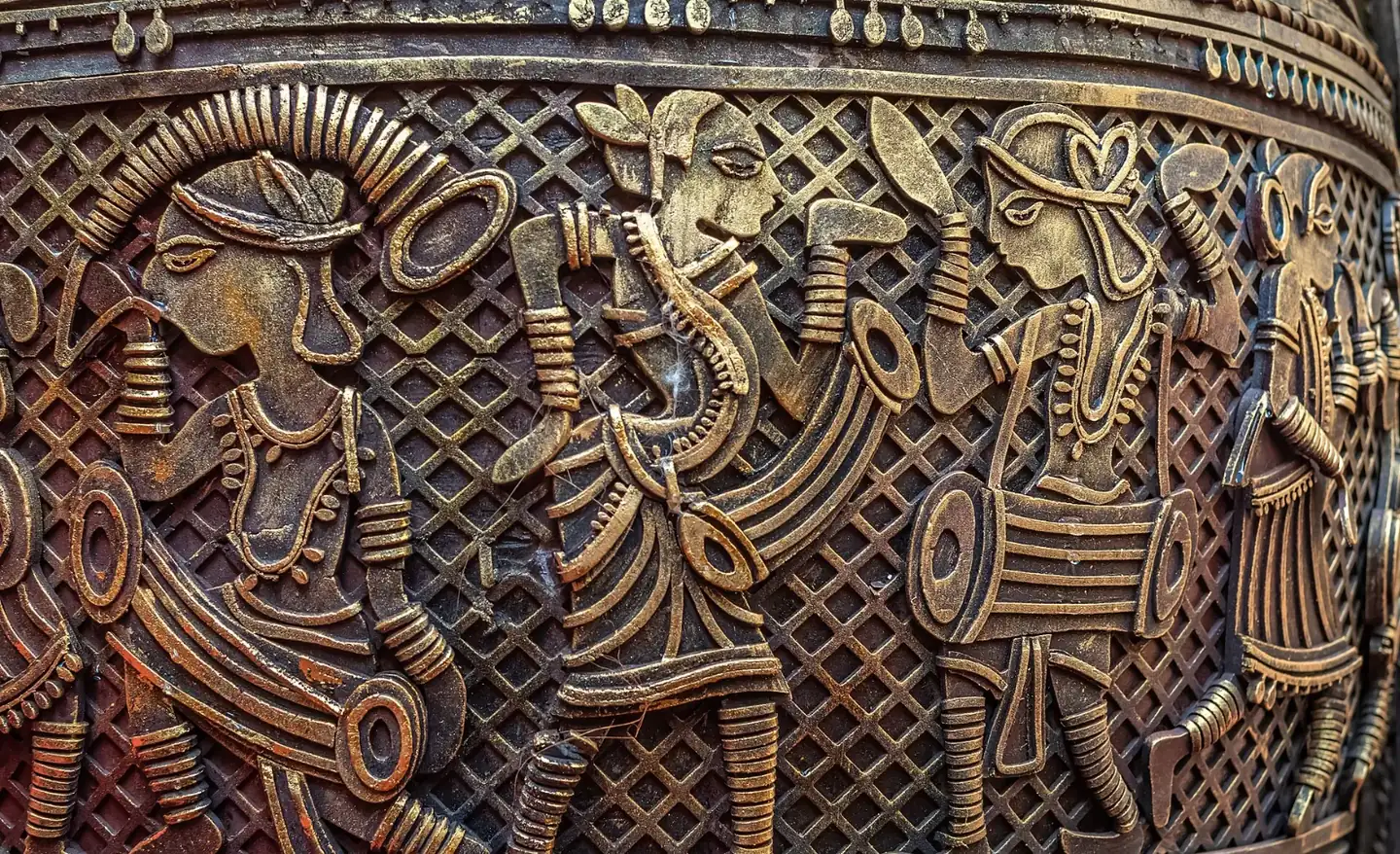
- Region
- Adilabad district
- Technique
- Lost-wax casting
- Materials
- Brass and bronze (sometimes silver or gold)
- Artisans
- Ojha community, about 50 families
A living tradition
Lost-wax casting has been practised in India for well over two thousand years. In Adilabad, around fifty families continue the craft, passing skills from parents to children. Besides brass and bronze, some artisans also work in silver or gold for special pieces. Dhokra is sometimes called bell metal craft, after the alloys and the bells that were among its early products.
How it is made
Each piece begins as a clay core, which the artisan covers with beeswax and shapes by hand, adding thin wax threads for patterns and details. The wax model is then coated in more clay and left to dry. When molten metal is poured in, the wax melts and runs out, and the metal takes its place. Once cool, the clay shell is broken away to reveal the casting.
Because the mould is destroyed every time, every object is one of a kind. Depending on size and detail, a single piece can take days or even weeks.
What artisans make
Common designs include tribal deities, animals such as horses, elephants and birds, scenes of farming and village life, lamps, bells and decorative items for the home. The figures are typically long and slender, with a textured surface. Newer collaborations with designers have added practical items such as bowls, jewellery and table pieces, while the old technique stays the same.
Where to buy
The best place to find authentic work is in Adilabad district itself, at local markets, craft villages and specialist shops, where you can often meet the makers. State handicraft outlets in Hyderabad also stock Dhokra. We can include a visit to an artisan cluster in a northern Telangana tour.
Also nearby
Plan it with us
Tell us your dates and who is travelling. We will build the route, book the car, driver and hotels, and send you a clear quote.
