- Origin
- Coastal Karnataka
- Other names
- Aata, Bayalata, Dashavatara
- Music
- Bhagavata (singer), chande and maddale drums
- Themes
- Ramayana, Mahabharata, Puranas
What you will see
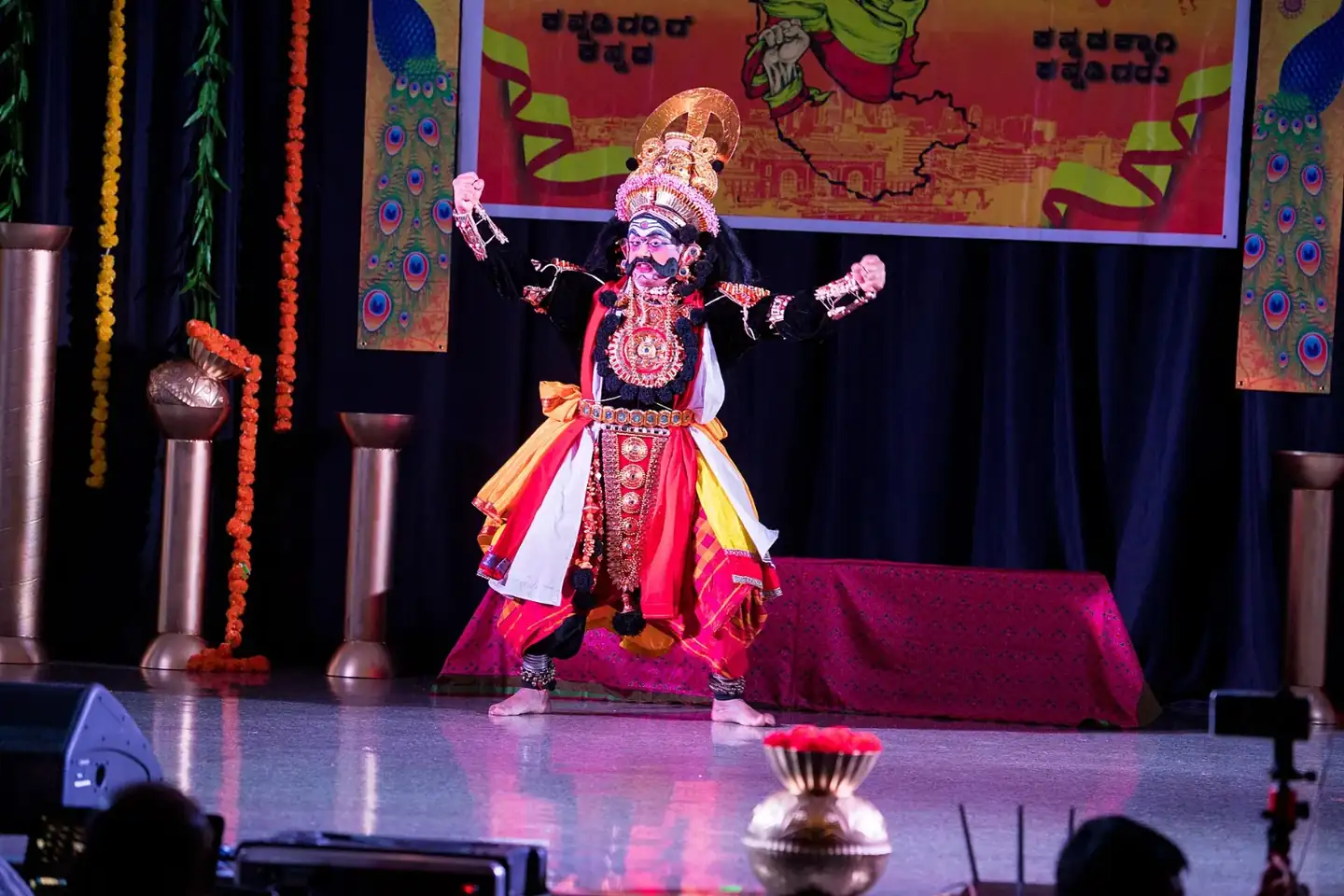
Performances retell episodes from the Ramayana, the Mahabharata and the Puranas. Actors wear towering headdresses (pagade), armlets (bhuja keerthi), belts and breastplates made of light wood, covered in gold foil and small mirrors that catch the lamplight. Bold face paint marks each character.
Traditionally the show is staged in an open-air arena and runs from nightfall to dawn. A related form uses puppets dressed and painted just like the actors.
Music and the bhagavata
The bhagavata, the lead singer, is the heart of the show. He sings the story, sets the rhythm and guides the actors. He is accompanied by the chande, a loud cylindrical drum, and the maddale, a two-sided hand drum, which together give the performance its driving energy.
Improvised dialogue
While the songs follow set texts, the spoken lines are largely improvised. Experienced actors debate, joke and explain philosophy on the spot, which keeps each performance different, even when the same episode is staged by the same troupe, and lets them show off their knowledge of the scriptures.
How to see it
The main season in coastal Karnataka, around Udupi and Mangaluru, runs from roughly November to May, when troupes tour villages and temple festivals. In Pondicherry and elsewhere, performances appear occasionally at cultural festivals, so check local listings when you travel. Many modern shows are shortened to a few hours, and some troupes perform in Kannada only, so reading a summary of the episode beforehand helps a great deal. Plenty of spectators come and go through the night, so you need not stay until dawn. We can help you look for a performance while planning your South India trip.
Also nearby
Plan it with us
Tell us your dates and who is travelling. We will build the route, book the car, driver and hotels, and send you a clear quote.
