- Community
- Banjara (Lambadi)
- Technique
- Embroidery with mirrors, shells and beads
- Fabrics
- Cotton and wool
- Where to buy
- Hyderabad markets and emporiums
What makes it distinctive
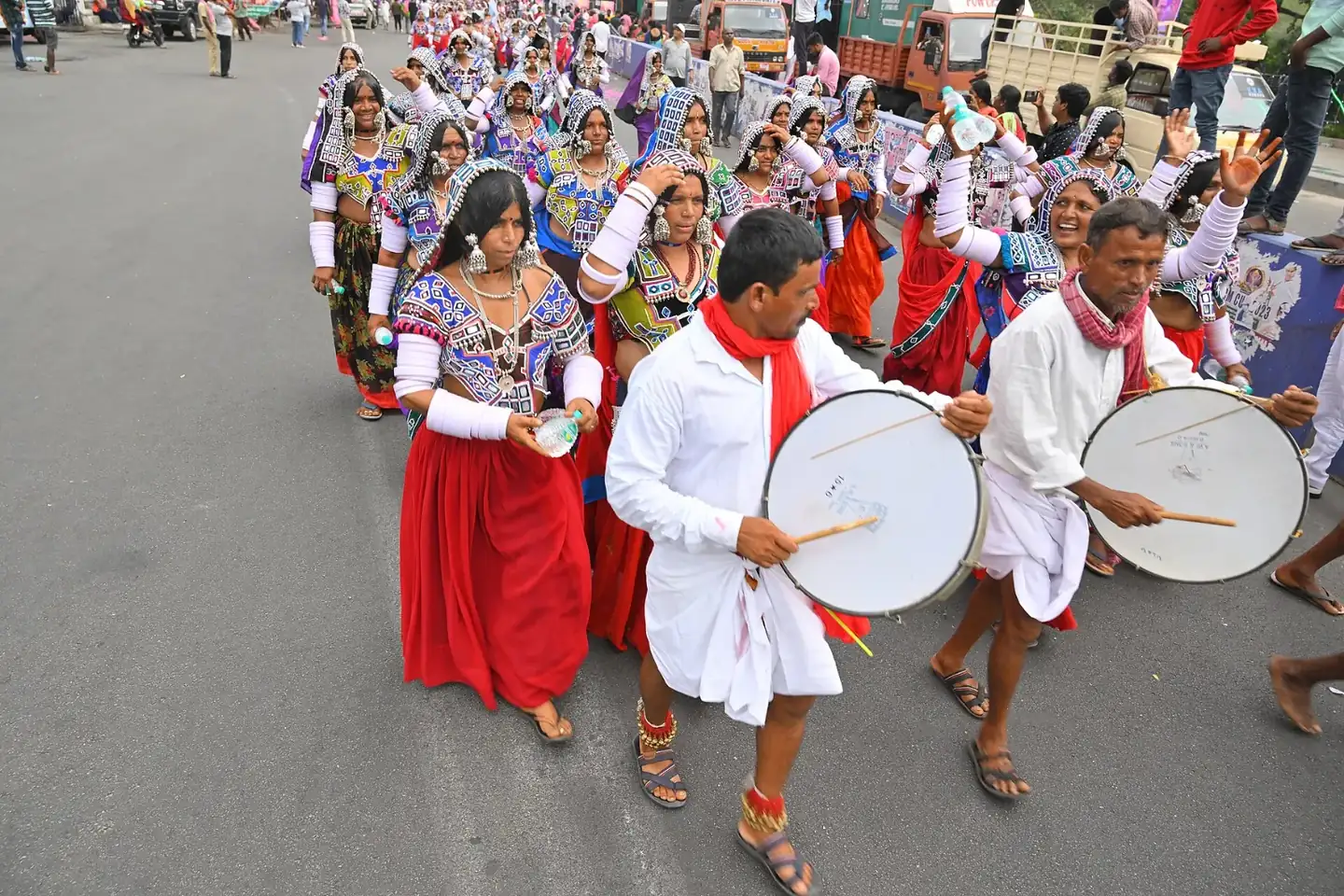
The work is built from tight, symmetrical geometric patterns stitched onto cotton or wool. The base cloth is usually a muted colour, which makes the bright threads stand out. Tiny mirrors are fixed into the pattern, and cowrie shells, beads and tassels are added along the edges, giving the pieces their texture and shine.
Meaning and tradition
The skill has been passed from mother to daughter for generations, and each pattern carries memories of the community's travels, work and beliefs. Motifs often draw on nature and daily life. For Banjara women, embroidered clothing and accessories are also a mark of identity.
From home craft to fashion
In recent decades the craft has gained a following across India and abroad. Designers and cultural groups have worked with artisans to create new products and to help women earn a fair income from their skill, which also helps the tradition survive for future generations.
What to buy
- Bags, pouches and purses
- Cushion covers, bedspreads and curtains
- Wall hangings and other home décor
- Blouses, skirts, stoles and other women's clothing
Where to buy
Look for Banjara work in handicraft markets and government emporiums in Hyderabad, and at craft fairs in Telangana, where you can often buy directly from artisans. Check the back of a piece: neat, tight stitching and securely fixed mirrors are signs of good handwork. Prices depend on the size of the piece and the density of the stitching, so a large, fully covered wall hanging can take weeks of work and costs accordingly. Buying directly from artisan groups ensures more of the money reaches the women who made it.
Plan it with us
Tell us your dates and who is travelling. We will build the route, book the car, driver and hotels, and send you a clear quote.
