- Altitude
- About 1,600 m
- Best time
- September to March
- Ideal time needed
- 2 to 3 nights
- Eravikulam timings
- 8 am to 4 pm (closed during calving season)
- Tea Museum timings
- 9 am to 5 pm, closed Mondays
- Distance to Mattupetty Dam
- About 13 km
Eravikulam National Park
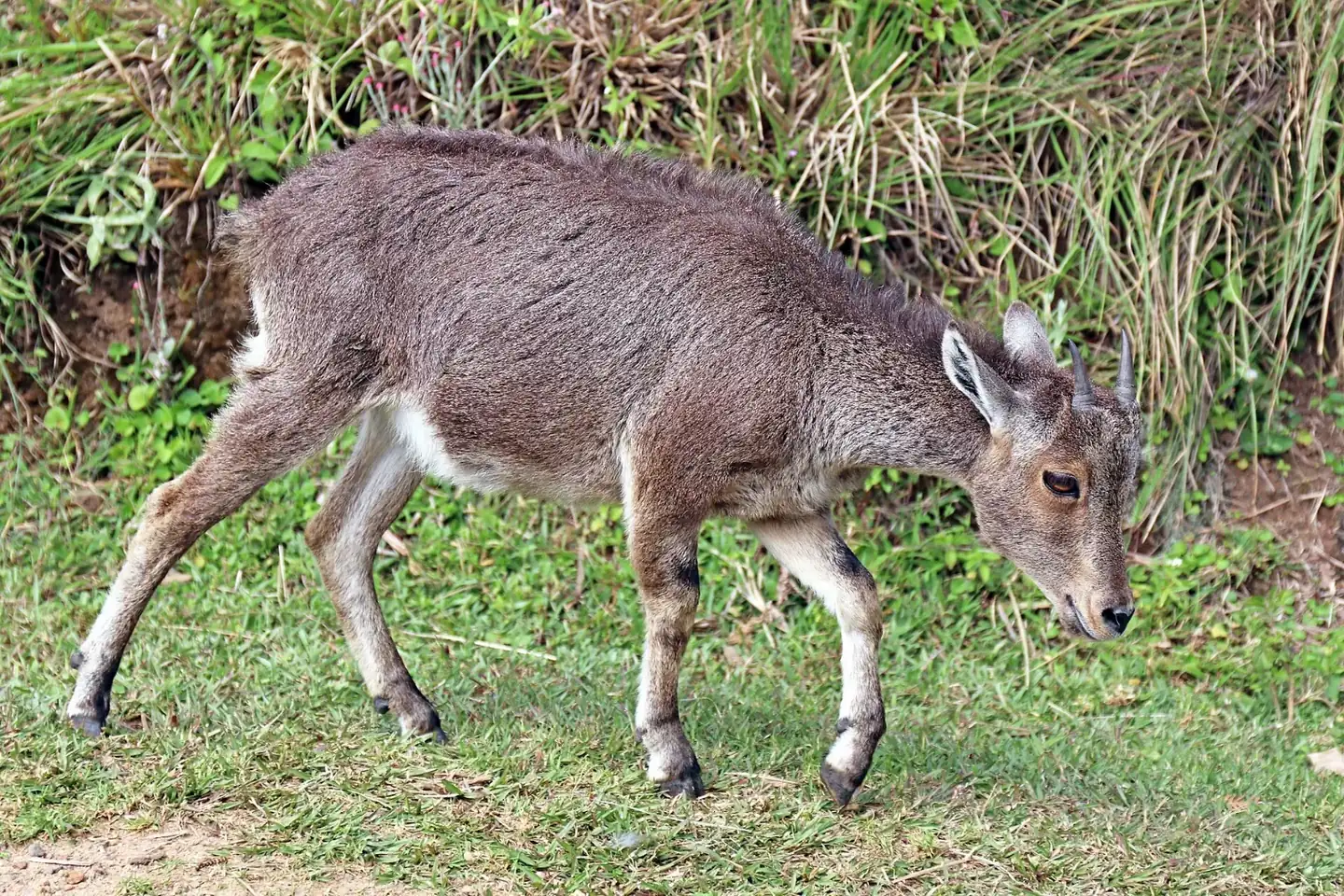
Just outside town, Eravikulam protects about 97 sq km of shola forest and high grassland. Declared a sanctuary in 1975 and a national park in 1978, it was set up mainly to protect the Nilgiri tahr, a mountain goat found only in the southern Western Ghats. Visitors are allowed only into the Rajamalai tourism zone, where tahr often graze close to the road. The park lies within the Western Ghats World Heritage area and also shelters elephants, gaur, sambar, Nilgiri langur and around 120 bird species. Anamudi, which at 2,695 metres is the tallest summit south of the Himalayas, rises within the park.
Park timings and fees
The park is open from 8 am to 4 pm, and tickets are sold online in time slots. It closes for tahr calving season, usually in February and March. At the time of writing, entry was ₹200 for Indian adults, ₹90 for Indian children and ₹500 for foreign visitors, with extra charges for cameras; confirm on the official park website before going.
Other sights
The Tata Tea Museum at Nallathanni Estate traces the story of Munnar's plantations with old machinery, photographs and a working demonstration of tea processing; it is open 9 am to 5 pm and closed on Mondays, with a small entry fee. Mattupetty Dam, about 13 km away, has boating on its reservoir and an Indo-Swiss dairy farm nearby. Echo Point, Photo Point, Kundala Lake and Pallivasal waterfalls make easy stops, and cultural centres such as Punarjani Traditional Village stage Kathakali and Kalaripayattu shows.
- Eravikulam National Park and Rajamalai
- Anamudi
- Tata Tea Museum
- Mattupetty Dam
- Echo Point
- Pallivasal Falls
Best time to visit
September to March is the best period, with clear skies after the monsoon and cool nights. Heavy rain falls from June to August, when some viewpoints are misty but the hills are at their greenest. Carry warm layers at any time of year.
How to reach
Munnar has no railway station or airport of its own. Most travellers fly into Kochi, roughly 110 km away, or take a train to Ernakulam or Aluva and continue by road through the ghats. We can arrange pickups from Kochi and a Munnar stay as part of a wider Kerala holiday.
Places to see in Munnar
Also nearby
Plan it with us
Tell us your dates and who is travelling. We will build the route, book the car, driver and hotels, and send you a clear quote.
