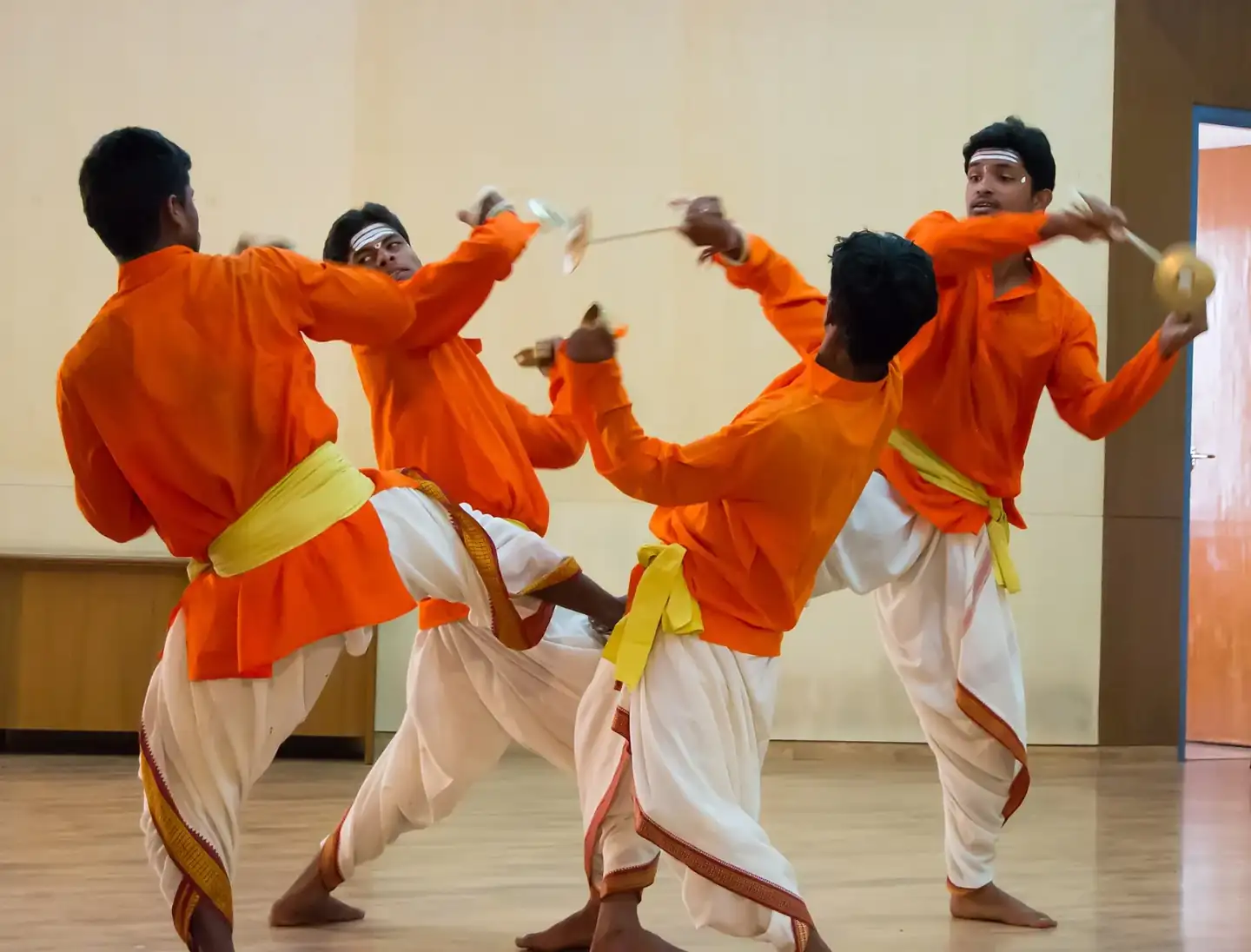
- Also known as
- Kamsale Nritya
- Instrument
- Bronze cymbals (kamsale)
- Performed by
- Halu Kuruba devotees
- Where to see
- Male Mahadeshwara Hills
- Best time
- Deepavali festival
How it is performed
A troupe usually has ten or twelve performers, each holding a pair of kamsale. The word beesu refers to the swinging movement of the arms as the cymbals are struck. The clash of bronze keeps the rhythm for songs praising Male Mahadeshwara, while the dancers jump, turn and weave around each other in step. It demands stamina and precision as much as devotion. Performances can build from a slow, measured opening to a fast finale, with the singing growing louder as the pace picks up.
The performers
The dance is traditionally performed by young Shiva devotees drawn from the Halu Kuruba community. After receiving diksha, or initiation, from a guru, a performer commits himself to the art for life. Troupes often walk from village to village, retelling the stories of Male Mahadeshwara in song, and their saffron clothes and rudraksha beads make them easy to recognise.
Where and when to see it
Male Mahadeshwara Hills, at around 3,000 feet, is the best place to watch Beesu Kamsale in its proper setting. The busiest time is the three-day Deepavali festival, when pilgrims arrive from across Karnataka and Tamil Nadu and troupes perform in and around the temple. You may also see it at state cultural festivals and heritage events in Bengaluru and Mysuru.
Tips for your visit
MM Hills is a forested hill shrine, so allow time for the ghat road and plan to stay overnight during festivals, as rooms fill quickly. Ask before photographing performers during rituals. We can arrange a trip from Mysuru or from Tamil Nadu via Hosur and Mettur.
Also nearby
Plan it with us
Tell us your dates and who is travelling. We will build the route, book the car, driver and hotels, and send you a clear quote.
