- Area
- About 700 acres
- Best time
- September to February
- Ideal time needed
- 3 to 4 hours
- Nearest railway station
- Chittorgarh Junction
- Status
- UNESCO World Heritage Site (Hill Forts of Rajasthan)
History
Tradition links the fort's origins to the Mori rulers of the 7th century, and it later became the stronghold of the Sisodia kings of Mewar. Chittor fell to three great sieges: by Alauddin Khilji in 1303, by Bahadur Shah of Gujarat in 1535, and by the Mughal emperor Akbar in 1568. Each ended in fierce last stands by the men and jauhar by the women, events that are still remembered with deep emotion.
What to see
Seven gateways, or pols, guard the winding road up the hill. Inside you will find palaces, reservoirs and many Hindu and Jain temples.
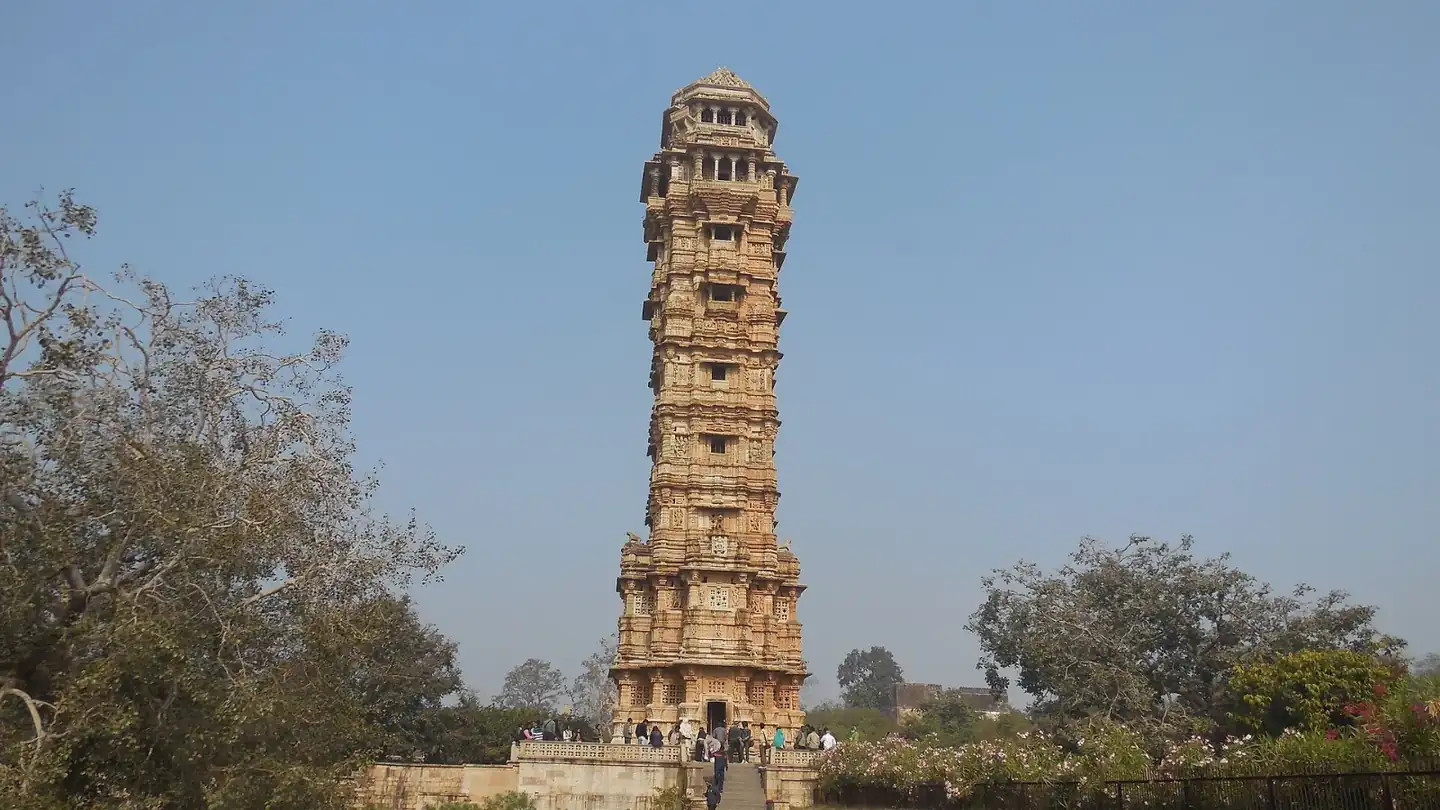
- Vijay Stambh, the nine-storey Tower of Victory, built for Rana Kumbha during the 1400s and covered with sculpture
- Kirti Stambh, a slender Jain tower dedicated to Adinath
- Rani Padmini's Palace beside its lotus pool
- Rana Kumbha's Palace
- Meera Temple and Kumbha Shyam Temple
The Padmini legend
The best-known story tells how Alauddin Khilji saw the reflection of Queen Padmini in the pool beside her palace and laid siege to Chittor to win her. Whether history or legend, it gives the quiet water pavilion a strong pull for visitors.
Tips for your visit
September to February is the most comfortable time. Allow at least three to four hours, or half a day if you enjoy history. The site is large, so hire a vehicle to move between sections and wear comfortable shoes. Guides are available at modest rates, and photography is allowed throughout.
Chittorgarh Junction railway station is well connected, and good roads link the town with Udaipur and Jaipur. We often include Chittorgarh on a Udaipur itinerary.
Also nearby
Plan it with us
Tell us your dates and who is travelling. We will build the route, book the car, driver and hotels, and send you a clear quote.
