- Timings
- 10 am to 5 pm
- Distance from Visakhapatnam
- About 90 km
- Nearest railway station
- Borra Guhalu (about 1 km)
- Nearest airport
- Visakhapatnam
- Ideal time needed
- 1–2 hours
What to see
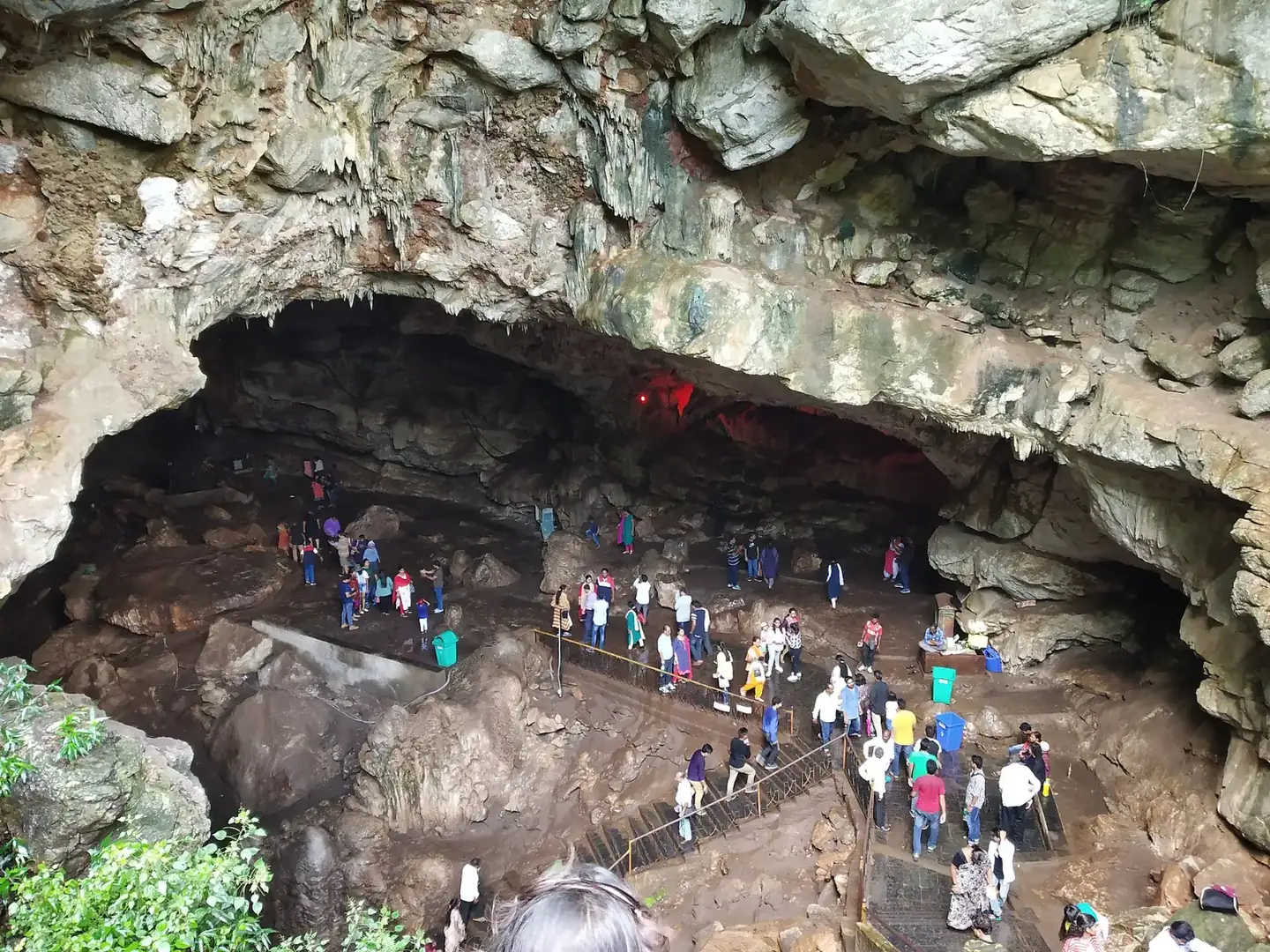
Inside, the caves open into large chambers filled with stalactites hanging from the roof and stalagmites rising from the floor, in all kinds of odd shapes. Local guides like to point out formations that resemble animals or deities. The caverns go down to a depth of about 80 metres, and the railway line towards Kirandul runs over the top of the hill that holds them.
Take time over the approach as well: the valley around the entrance is covered with semi-evergreen and deciduous forest.
History
The caves are credited to the British geologist William King, who recorded them in 1807. Much older traces of people have been found here too: archaeologists have recovered stone tools from the Middle Palaeolithic period, suggesting human use tens of thousands of years ago. Tribal communities such as the Jatapu, Porja, Kondadora and Nookadora live in the surrounding hills.
Timings
The caves are generally open from 10 am to 5 pm. Allow one to two hours for the visit, including the walk down and back up. Paths inside can be damp and uneven, so wear shoes with a good grip.
How to reach
Visakhapatnam Airport is the nearest airport. The closest railway station is Borra Guhalu, about 1 km from the caves, served by trains on the Visakhapatnam to Araku line, which is itself a scenic ride through tunnels and hills. By road, the caves are on the Araku route from Visakhapatnam, and the ghat roads are in reasonable condition. We can arrange a car for a Vizag–Borra–Araku circuit.
Nearby
Galikonda viewpoint and the Katiki waterfall are both close by and easy to add to the same day. Araku Valley itself, with its coffee plantations and tribal museum, makes a good overnight base.
Also nearby
Plan it with us
Tell us your dates and who is travelling. We will build the route, book the car, driver and hotels, and send you a clear quote.
